Shipping information
 Worldwide
 Need Financing?







Motion Corvette: When Muscle Met Madness
Few names in American performance culture spark a “lean-in” conversation quite like the Motion Corvette. Long before modern supercars relied on silicon chips, launch control, and carbon fiber, there was a small, grit-under-the-fingernails shop in New York turning already potent cars into street-legal monsters.
At the heart of this high-octane madness was Joel Rosen, the visionary behind Motion Performance. In the late ’60s and early ’70s, Rosen teamed up with Baldwin Chevrolet to create a legendary partnership. Together, they didn’t just sell cars; they sold adrenaline.
The Birth of a Legend
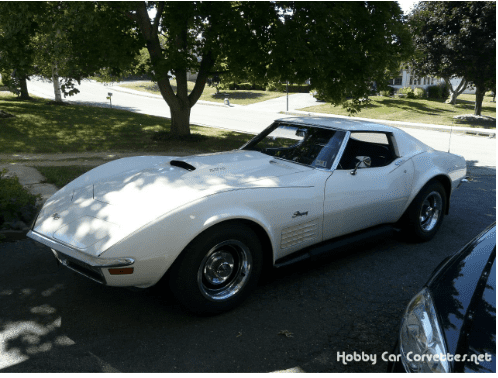
The foundation was the already formidable Chevy Corvette, but for Rosen, “factory” was just a starting point. Customers visiting Baldwin Chevrolet could order a brand-new Vette and have it immediately shipped down the road to Motion Performance.
These weren’t just bolt-on kits. Motion builds were comprehensive transformations that included:
- Massive Big-Blocks: Blueprinted and balanced for maximum violence.
- Radical Camshafts: Giving the cars that signature, aggressive “loping” idle.
- Custom Bodywork: From flared fenders to iconic “whale tails.”
The most famous part of the legend? Rosen’s guarantee. If a Phase III Motion car didn’t turn an 11.50-second quarter-mile with a sanctioned driver, he’d give you your money back. In 1970, that wasn’t just fast, it was supernatural.
Phase III vs. The Phase III GT: Going Full Custom
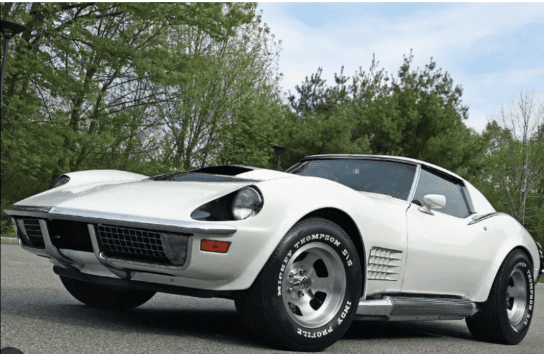
If a standard Phase III car was a punch to the jaw, the Phase III GT was an entire street fight. While the standard Phase III Corvettes retained most of their factory body lines, opting for “Day Two” bolt-ons like high-rise hoods and subtle flares, the GT went completely off the deep end into full custom territory. Joel Rosen wanted a car that could hunt down European exotics, so he ditched the heavy factory pop-up headlights for aerodynamic, recessed LeMans-style lamps under clear covers. Around back, the transformation was even more radical, replacing the standard C3 vertical glass with a sweeping, fastback rear window that gave the car a menacing, spaceship-on-the-prowl silhouette. Only a handful of these GTs were ever built, making them the holy grail of the Baldwin-Motion universe.
The Catalog: High Performance via Mail Order
While the full Baldwin-Motion cars were the crown jewels, Motion Performance was also a powerhouse in the mail-order business. You didn’t necessarily have to live in Long Island to get the “Motion touch.”
Their massive catalogs allowed enthusiasts across the country to transform their own cars using the same parts Rosen used in the shop. You could flip through the pages and order:
- The “Fly Eye” Air Cleaner: An iconic Motion staple.
- Mallory Ignitions and Holley Carbs: Spec’d specifically for high-performance street use.
- Suspension Kits: Heavy-duty shocks and springs to keep all that power planted.
- Fiberglass Body Panels: To give any C3 that wide-body, Mako Shark-inspired look.
How to Build Your Own “Motion” Tribute
You don’t need a six-figure auction budget or a time machine to Baldwin, NY, to capture that spirit. If you have a used C3 Corvette in your garage, you can recreate the Motion magic by focusing on four distinct “pillars”:
1. The Silhouette (The “Mako” Look)
The first thing people notice about a Motion car is the drama.
- The Hood: Swap your stock hood for a L88-style long hood or a custom Motion “scoop” hood.
- The Rear: Look for a “tunnel back” or flat rear window conversion.
- The Paint: It’s all about the Motion Stripe. A wide, centered stripe that wraps over the tail and onto the rear deck is the visual calling card of a Rosen masterpiece.
2. The “Fly Eye” Engine
Under the hood, it’s about “Day Two” modifications, parts an owner would have installed the second day they owned the car.
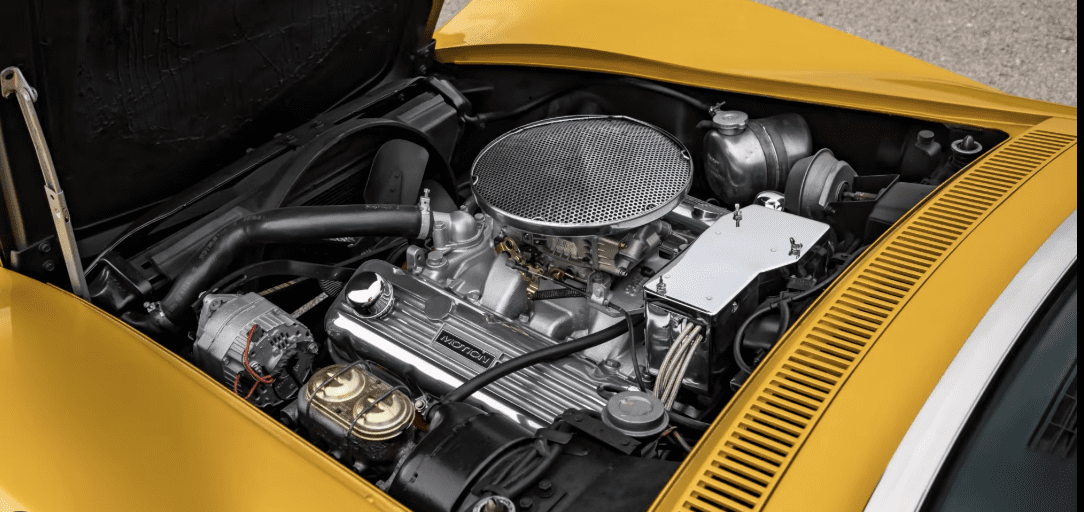
- The Air Cleaner: Install the chrome-mesh “Fly Eye” air cleaner. It’s the single most recognizable piece of Motion engine jewelry.
- The Muscle: Even if you have a small-block, dress it up with finned aluminum valve covers (like Mickey Thompson or Edelbrock) and a high-rise intake manifold.
3. The Side Pipes
A true Motion Corvette isn’t heard; it’s felt.
- Skip the tucked-away factory exhaust. You want hooker headers feeding into massive side-mounted pipes.
- The raw, metallic roar of a big-block exhaling through side pipes is essential to the “Madness” persona.
4. The Stance
Motion cars always looked like they were ready to pounce.
- The Wheels: Source a set of cragar S/S wheels or deep-dish American Racing Torq Thrusts.
- The Rubber: Run slightly narrower tires in the front and massive, meatier tires in the rear to give the car that aggressive “rake.”
The Final Thought
The Motion Corvette isn’t just a modified sports car; it’s a time capsule of an era when the only limit was how much gas you could pump and how much courage you had in your right foot.By adding these “Motion touches” to your own Corvette, you aren’t just building a fast car, you’re keeping the spirit of Joel Rosen’s “Muscle Madness” alive on the road today. Build it loud, build it fast, and never apologize for the noise.