
 Shipping information
 Worldwide
 Need Financing?






The Corvette Stingray is one of the most recognized names in American automotive history, but most people get the basics wrong. They think of it as a model but it’s not. The Stingray is a badge and a body style. It’s one that appeared on Corvettes from 1963 to 1976, disappeared for nearly four decades, and came back in 2014.
Here’s how it happened, who built it, and why the name still matters to anyone shopping for a classic Corvette.
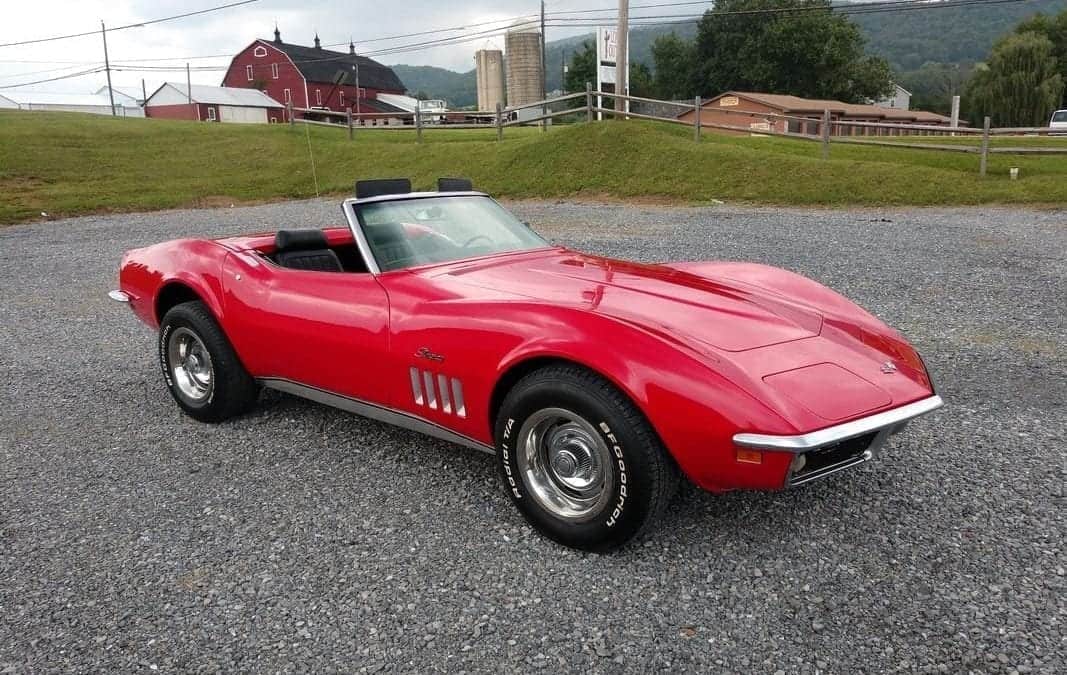
How the Stingray Came to Be
Stingray Corvettes through the Years
1959: The XP-87 Sting Ray Racer
Mitchell debuted the Sting Ray Racer in 1959 as a SCCA race car. It competed in the C-Modified class and won its class at Road America in June 1960, driven by Dr. Dick Thompson. The car wasn’t available for purchase but it proved the design worked on the track and gave the public its first look at what was coming.
Mitchell drove it on weekends. It was, by most accounts, his favorite car.
The C2 Sting Ray: 1963–1967
In 1963, the second generation of Corvettes launched and brought the Sting Ray name (two words) to a production car for the first time. The design was unmistakable. It had a pinched waist, hidden headlamps, a long hood over a short rear deck, and for 1963 only, a split rear window on the coupe.
The C2 Sting Ray weighed about 3,150 pounds and rode on a new independent rear suspension which was a first for the Corvette. Engine options ranged from a 250-hp 327 small block up to a fuel-injected 360-hp 327.
By 1965, the 396 big block was available, and by 1966, the legendary 427 big block had arrived with up to 425 horsepower on paper.
Buyers could choose between a coupe and a convertible in every year. Production ran from 1963 through 1967 with five model years total. All of them wore the Sting Ray badge. Today, these are the most collectible C2 Corvettes, and the 1963 split-window coupe is the single most sought-after Corvette of the era. See our 1963–1967 Corvette inventory.
The C3 Stingray: 1969–1976
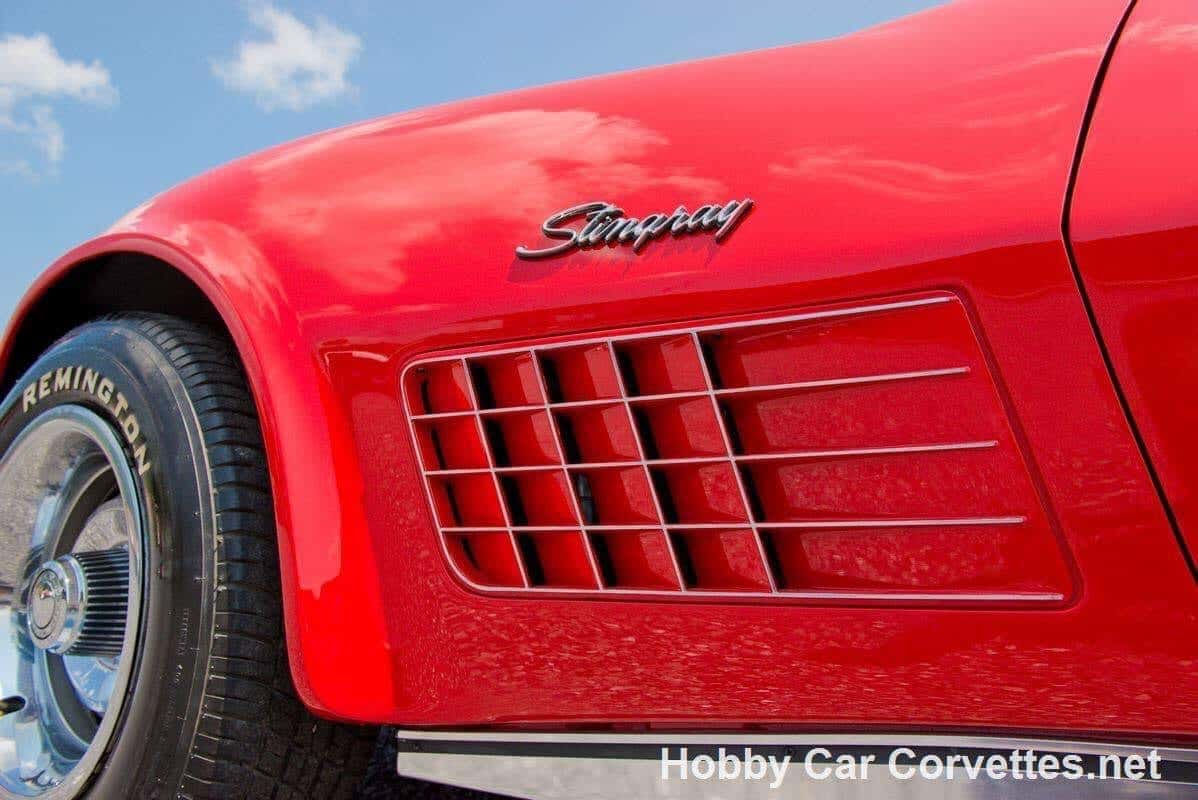
The third-generation Corvette launched in 1968, but oddly, that first year didn’t carry any Stingray badge at all. The name came back for 1969, respelled as a single word: Stingray.
The early C3 Stingrays from 1969 through 1972 are the most desirable. These are the chrome-bumper cars, and they came with some of the most powerful engines GM ever put in a production Corvette – the LT-1 350 (370 hp), the LS5 454 (365 hp), and the LS6 454 (425 hp, 1970 only). A 1970 LT-1 convertible with a 4-speed is one of the most valuable C3s you can buy.
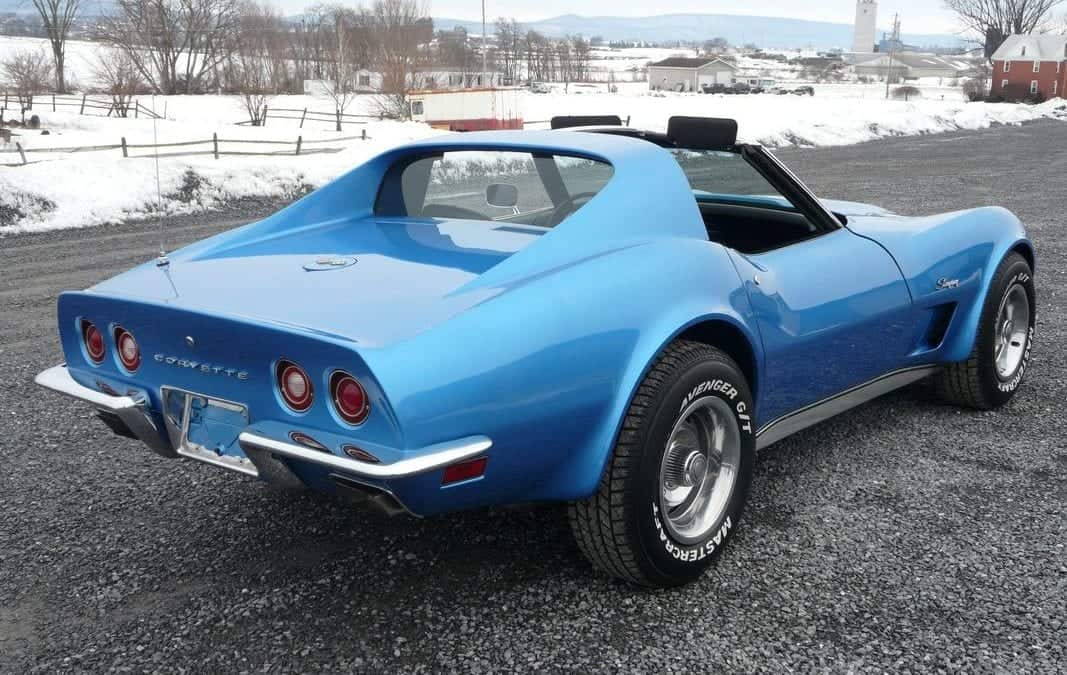
From 1973 through 1977, the federal bumper regulations changed the front and rear end styling. The chrome bumpers gave way to body-colored urethane covers. Horsepower dropped as emissions standards tightened.
By 1975, the base L48 350 was down to 165 hp. The Stingray badge stayed on the car through 1976, then GM dropped it to cut costs. Dealers reportedly drilled holes in 1977 and later models to bolt on old Stingray emblems, because customers wanted them that badly.
The Stingray body style continued through the end of C3 production in 1982, even without the name on the fender.
Browse our full Stingray Corvette inventory to see what’s currently available.

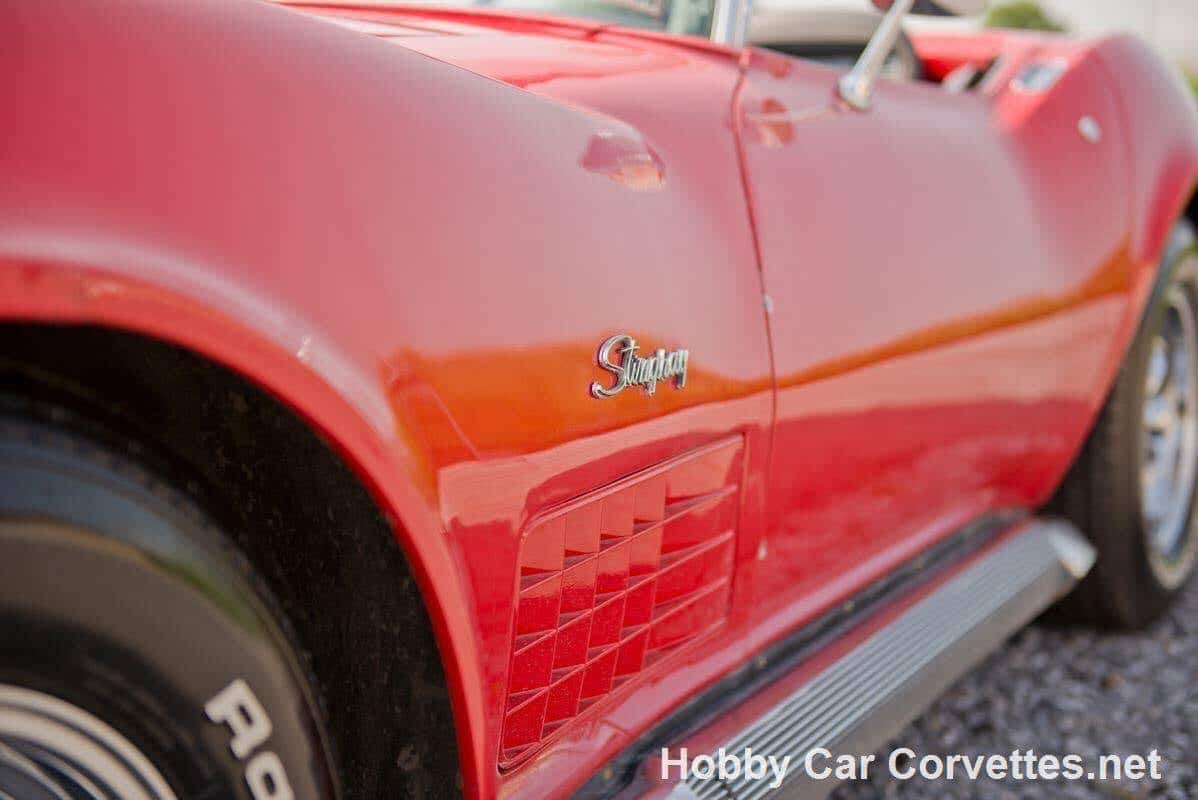
Corvette Stingray Year By Year Comparison
| Years | Generation | Badge | Notes |
|---|---|---|---|
| 1963–1967 | C2 | Sting Ray (two words) | Split-window coupe (1963 only), IRS, up to 427 big block |
| 1968 | C3 | None | First C3 year — no Stingray badge |
| 1969–1976 | C3 | Stingray (one word) | Chrome bumpers through 1972, rubber bumpers from 1973 |
| 1977–1982 | C3 | None | Stingray body style continues, badge dropped |
| 2014–present | C7/C8 | Stingray | Name revived on seventh-generation Corvette |
The Stingray Body Style: More Than a Badge
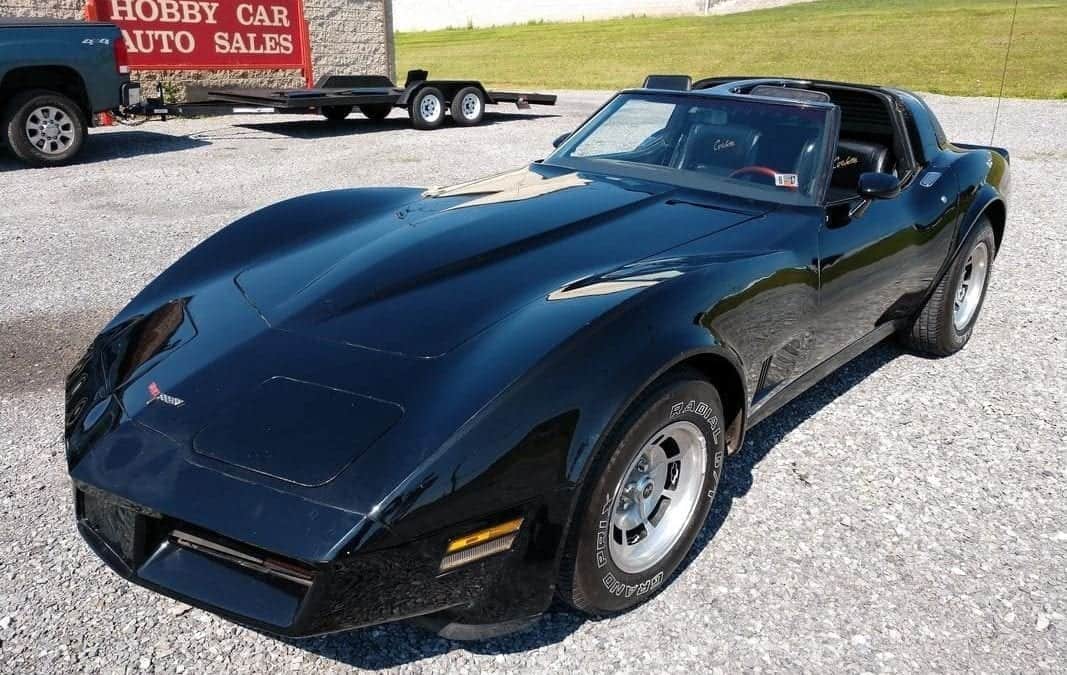
The Stingray badge came and went, but the body style it defined lasted two decades. From 1963 through 1982, every Corvette wore some version of the shape Bill Mitchell pulled from that manta ray. The long, low nose, the muscular rear fenders and the tapered tail never left. Even after 1976, when GM stopped stamping “Stingray” on the fenders, the silhouette was the same. A 1981 Corvette is a Stingray in everything but name.
The C2 version (1963–1967) was smaller and lighter than the C1 it replaced. The C3 version (1968–1982) stretched the proportions, especially across the rear fenders, and added the distinctive “Coke bottle” waistline. Both generations used the same basic formula including a front-engine, rear-drive, fiberglass body, two seats.
The original Sting Ray combined ideas from the scrapped SS Racer and the Q Corvette. The new design was lighter than the C1, had a shorter wheelbase (98 inches vs 102), and got the Corvette’s first independent rear suspension. That mechanical upgrade, paired with Mitchell’s bodywork, turned the Corvette from a fast touring car into a genuine sports car.
The Stingray Name Returns: 2009 Concept and 2014 C7
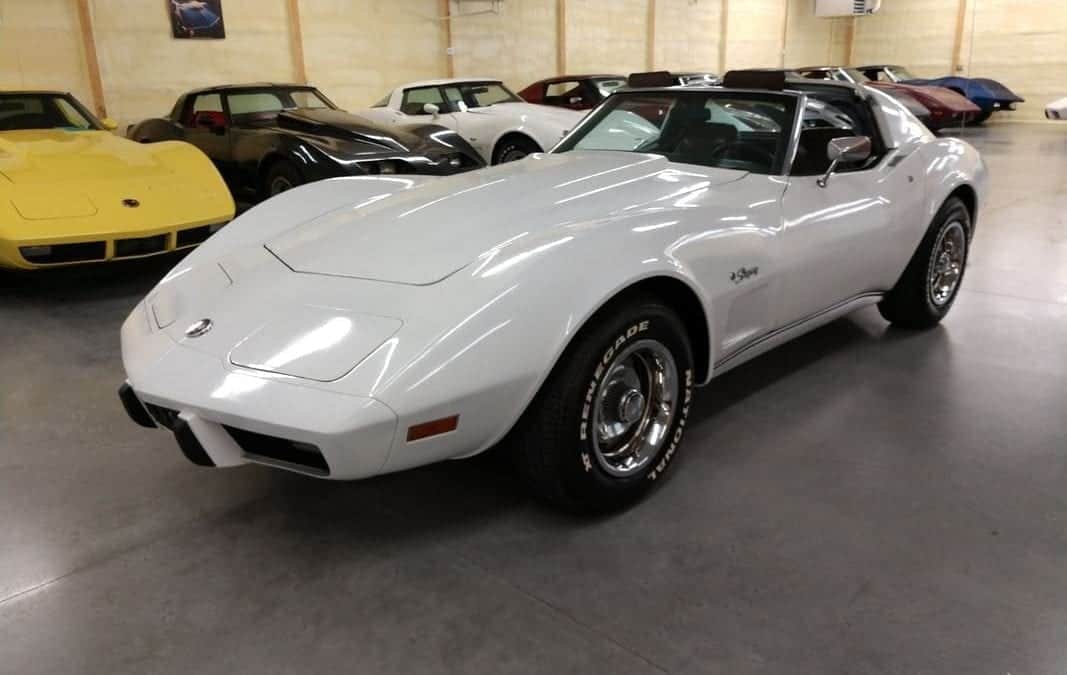
Browse Classic Stingrays for Sale
We keep 60+ Stingray Corvettes in stock at our Martinsburg, PA showroom including C3 Stingrays, big blocks, small blocks, convertibles, and T-tops. Prices start around $8,000 for a running project and go up from there for matching-numbers and restored cars.
If you’ve been reading about these cars and you’re ready to own one, browse the current Stingray inventory or call us at (814) 937-4941.
Frequently Asked Questions
Is a Corvette Stingray the same as a C3 Corvette?
How much is a classic Corvette Stingray worth?
It depends on year, engine, transmission, and condition. Mid-1970s C3s often sell for $12,000–$18,000 in driver condition, while desirable big block or C2 cars can bring $40,000 to six figures. Browse all of our Stingrays for sale.
What year did the Corvette Stingray come out?
The Corvette Sting Ray first appeared in 1963 on the C2 generation. The name returned on the C3 in 1969 as Stingray, then was dropped after 1976.